 AdonisIQ
Your watch collects sleep. Your food app counts calories. Your workout tracker remembers every rep. Yet weeks pass and you still cannot answer the question that matters: what should I change?
Fitness data can help, but only when it is accurate enough to interpret and connected to a decision you can repeat. The problem is rarely that you lack one more graph. More often, the measurements are disconnected from your goal, compared over the wrong time period, or mistaken for an instruction.
Key takeaways
- Collecting metrics is not a progress plan. For each number, define the decision it might change.
- Look for patterns, not one-day swings. Weight, sleep, and strength performance all have normal variation.
- Keep training measurable. Similar exercises, technique, effort, and logged sets make progressive overload easier to evaluate.
- Interpret data together. Under-fueling, missed workouts and poor sleep can overlap; a single recovery number cannot identify the cause.
- Make one sensible adjustment and reassess. More dashboards are rarely the first solution.
Why tracking more does not automatically mean improving more
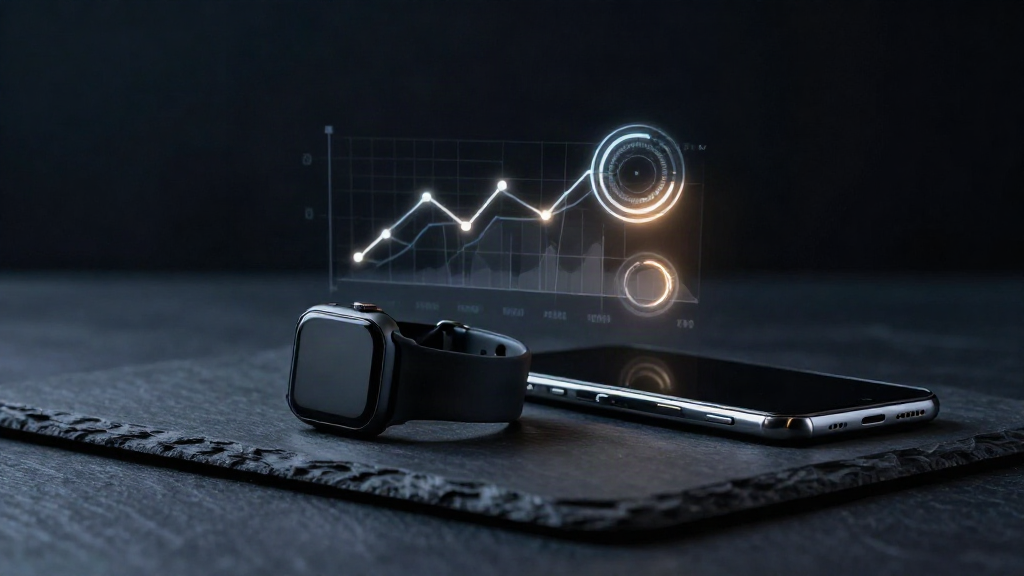
A 2022 umbrella review in The Lancet Digital Health gathered 39 systematic reviews and meta-analyses covering 163,992 participants. Overall, wearable activity trackers were associated with improvements in physical activity, including an estimated 1,800 additional daily steps. That is a reason to take tracking seriously—not evidence that every tracker, graph or AI suggestion guarantees muscle gain or fat loss.
The gap between measurement and action is where many programs stall. For physique goals, useful measures include completed training relative to plan, comparable lift performance, nutrition intake trends, bodyweight or waist trends, and recovery context. Each answers a different question.
Sign 1: You check the numbers but cannot name your next action
You review steps, sleep, calories, HRV and a dashboard score every morning. Still, if somebody asks what you will do differently today, you cannot explain it.
The fix: attach a specific decision to each metric before tracking it. Calories might guide a planned nutrition adjustment after a sustained weight trend. A missed workout might prompt a schedule adjustment. A repeated decline in comparable lifting performance might prompt a closer look at fatigue, technique and training load.
| Metric | Useful question | Possible next step |
|---|---|---|
| Logged workouts | Did I complete the intended sessions? | Rearrange the next training day rather than piling on make-up volume. |
| Lift performance | Am I improving at comparable effort and technique? | Repeat the load, add a rep, or assess accumulated fatigue. |
| Intake and weight trend | Is the observed trend consistent with the goal? | Review adherence before changing calorie targets. |
| Sleep trend | Is disrupted sleep persistent or an isolated night? | Protect the sleep opportunity and monitor performance. |
Notice that these are possible next steps, not automatic prescriptions. Data informs judgment; it does not replace it.
Sign 2: Every scale fluctuation triggers a new diet
A heavy dinner, travel day, menstrual-cycle change, hard workout or higher carbohydrate intake can affect short-term scale readings through water, food and other components of bodyweight. A single morning cannot tell you how much body fat changed.
The fix: weigh under reasonably consistent conditions if daily weighing suits you, then compare weekly averages or another consistent multi-day trend. Review waist measurements, adherence, training performance and photos when appropriate. Do not make large calorie changes because of a single spike.
MedlinePlus explains that bodyweight includes more than body fat, while the National Heart, Lung, and Blood Institute recommends self-monitoring and specific, sustainable goals. Tracking is most helpful when it informs a reasonable longer-term adjustment rather than an emotional daily response.
Example: your morning weight rises two pounds after restaurant food, but your seven-day average is stable and your waist trend is unchanged. That is a cue to keep observing, not automatically slash your food intake.
Sign 3: You log workouts but cannot see progressive overload
Your training diary is full of sessions, yet exercise selection changes constantly, reps are missing, and nothing records how hard the sets felt. You are active, but it is difficult to tell whether your training stimulus is progressing.
The fix: keep enough continuity to compare meaningful work. Record the exercise, load, reps, hard sets and effort (such as reps in reserve, or RIR) when useful. Check whether technique and range of motion are comparable before deciding that a new personal best is genuine.
A simple double-progression example: prescribe 3 sets of 8–12 reps. If you achieve 10, 10 and 9 with the intended effort, keep the load and try to build reps. When your working sets consistently reach the upper end with sound technique, a modest load increase may be appropriate. This is an illustration, not a requirement to increase weight every workout.
The American College of Sports Medicine's updated resistance-training position stand highlights the value of matching training variables to goals and notes that progressive overload becomes especially relevant for sustained long-term advancement. More sets are not automatically better, and progression need not always mean a heavier barbell.
Where Adonis Forge fits: its structured workouts, training history and exercise-level progression targets are designed to make those comparisons easier. See our 3-, 4- and 5-day workout plans for practical programming examples.
Sign 4: You treat sleep or recovery scores as commands
You see a low wearable recovery reading and cancel a workout, even though the actual training trend is fine. Or you see a high score and push harder despite several difficult sessions in a row.
The fix: use wearable readings as context. Check whether the pattern repeats, whether sleep opportunity changed, whether you feel unwell and whether your actual performance is declining. Different devices calculate readiness and recovery differently, and those metrics are estimates rather than direct measurements of how much training your muscles can tolerate.
One short night might justify a more conservative session if you feel poorly recovered. It does not automatically require a full deload. If you have concerning symptoms, prioritize medical advice rather than an app score.
For a deeper explanation, see our HRV and training guide and the Apple Watch training-plan guide.
Sign 5: Your nutrition, training and progress live in separate silos
Your calorie tracker shows intake, your watch reports sleep, and your workout app reports sets. If strength stalls, you must manually assemble the story. Maybe nutrition consistency has declined. Maybe your workload increased. Maybe sleep has been disrupted. The app with the most colorful chart is not necessarily the one that helps you answer the question.
The fix: run a short weekly review that combines only the measurements relevant to your goal. For a lean bulk, review intake consistency, bodyweight trend, key lifts and recovery. For fat loss, consider the weight or waist trend alongside protein, adherence, activity and strength retention. If data is missing, say it is missing rather than treating it as a real zero.
This is the problem AdonisIQ aims to address: Adonis Forge handles structured training and progression; the nutrition experience sets goal-aware targets; the Progress view brings together training, nutrition, body composition and recovery trends; and Coach Adonis provides a conversational way to examine what to prioritize. The AdonisIQ Score is a daily goal-consistency indicator across habits—not a medical readiness score or a fixed weighted combination of sleep and recovery.
A 10-minute weekly review that turns tracking into a plan
- Restate the goal: muscle gain, strength, fat loss or body recomposition.
- Review adherence: which workouts and nutrition targets were actually completed?
- Compare trends: use multiple observations rather than a single high or low day.
- Inspect performance: compare a few repeatable lifts at similar technique and effort.
- Add context: note substantial sleep disruptions, unusual stress or illness without assuming any one explains everything.
- Choose one change: a small nutrition adjustment, a more repeatable workout schedule, or a recovery-focused modification.
- Set a review date: allow enough time to see whether the intervention helps.
Three mistakes to avoid even with an AI fitness coach
Overreacting to small changes
AI makes it easy to get a quick interpretation. That does not mean a 24-hour movement in bodyweight, HRV or estimated calorie burn is a clear causal signal. Check the trend first.
Assuming missing data means poor compliance
Sync gaps and incomplete logging happen. Distinguish an unrecorded meal from a skipped meal and an unrecorded session from a missed session before recommending adjustments.
Changing too many variables at once
If you simultaneously cut calories, double cardio and add training volume, the result is hard to interpret. Make smaller, goal-appropriate changes you can monitor.
Frequently asked questions
Why am I tracking everything but not losing fat?
A stalled weight trend can reflect adherence, intake estimates, changes in activity or normal fluctuations. Review several weeks of consistent weight and food records before assuming your calorie target must change. Consider medical or medication factors with a qualified professional when relevant.
Does tracking my workouts guarantee muscle growth?
No. A workout log helps make training measurable, but progress also depends on sufficient effort, appropriate training, recovery, nutrition and individual circumstances.
Is an Apple Watch recovery score enough to plan training?
No single recovery score is sufficient. Compare wearable information with symptoms, performance, recent training and longer-term patterns.
How often should I review my fitness data?
Daily logging can be useful, while a short weekly review often makes more sense for decisions. More substantial nutrition or programming changes may need multiple weeks of evidence, depending on your goal.
What does the AdonisIQ Score measure?
It summarizes goal consistency across tracked habits including training, nutrition, sleep, steps and weigh-ins. It does not directly measure muscle recovery or diagnose physical readiness.
Research and further reading
- Ferguson et al., 2022, The Lancet Digital Health: effectiveness of wearable activity trackers.
- American College of Sports Medicine, 2026: Resistance Training Prescription for Muscle Function, Hypertrophy, and Physical Performance.
- MedlinePlus: understanding bodyweight.
- NHLBI: weight management and self-monitoring.
Bottom line: your data needs a job
Five disconnected dashboards do not guarantee a better fitness plan. The goal is to understand the few measurements that matter, interpret them over a useful time horizon, and make a sensible next decision. That is the difference between tracking your fitness and using your fitness data.
Stop collecting numbers. Start using them.
Connect structured workouts with Adonis Forge, track nutrition and progress, and use Coach Adonis to put the bigger picture into context.
Try AdonisIQ free for 14 days ↗↑ Back to top · Compare connected fitness apps · All articles